
Why Do I Feel Guilty Resting?
Understanding burnout, productivity guilt, emotional exhaustion, and why so many millennials struggle to slow down.

A lot of people do not actually know how to rest anymore.
Even when the body is exhausted and the brain feels overloaded, slowing down can trigger guilt almost immediately.
You finally sit down to relax and suddenly your mind starts racing. You should answer that email. Get ahead for tomorrow. Clean something. Be productive. Stop wasting time. I can distinctly remember being told “You got time to lean? Then you got time to clean”.
For some people, rest does not even feel restful anymore. It feels uncomfortable. Agitating.
A lot of people intellectually understand they are burnt out, but emotionally still feel guilty the second they stop moving.
A Lot of Millennials Were Taught That Productivity Equals Worth
Many millennials grew up hearing things like “work hard now so you can relax later,” “don’t be lazy,” or “push through.” Being hardworking was praised. Being exhausted was normalized. That’s just what being an adult is. A lot of people quietly learned that being useful, productive, accommodating, or successful was what made them valuable.
Then social media and hustle culture amplified all of it even further. Suddenly there was pressure to optimize every part of life all the time. Career. Relationships. Health. Parenting. Productivity. Oh and let’s not forget protein ;).
Even rest somehow became something people tried to “do properly.” And if we are being really honest, a lot of us grew up glorifying the overachiever. The hyper competent friend who colour coded everything, answered emails immediately, pushed through stress, and somehow held everything together all the time. Basically Hermione Granger energy.
Meanwhile slowing down quietly started feeling lazy instead of necessary. And honestly, I do not think it is a coincidence that so many millennial women are now getting diagnosed with ADHD in adulthood after spending years believing they were just “bad at coping,” disorganized, emotional, forgetful, or not trying hard enough while carrying impossible mental loads and masking how overwhelmed they actually felt.
Over time, achievement stopped being just something people did and slowly became tied to identity. That is why slowing down can create so much discomfort for some people. Rest starts feeling like failure instead of recovery.
That kind of conditioning does not disappear overnight.
Burnout Often Looks Much Quieter Than People Expect
One of the most confusing things about burnout is that people often expect it to look obvious. They imagine someone completely falling apart, constantly crying, unable to function, or hitting some major breaking point overnight. But burnout usually builds much more quietly than that.
For many people, it develops slowly after months or years of chronic stress, emotional pressure, over-functioning, caregiving, constant anxiety, people pleasing, or continuing to push through without enough recovery or support. Because they are still managing daily life, many people do not even realize how depleted they have become until their nervous system starts struggling to keep up (or just fails altogether).
Burnout can look like constantly feeling tired no matter how much you sleep, becoming more irritable, emotionally numb, disconnected, or overwhelmed by small tasks that never used to feel this hard (and then you end up googling “Is this depression? Burnout? ADHD? Hormones?)
It can also look like wanting everyone to leave you alone while simultaneously feeling lonely.
Over time, many people notice themselves becoming more emotionally reactive, exhausted, anxious, disconnected, or unable to recover the way they used to. Things that once felt manageable suddenly start feeling impossible. Most of us start to find ourselves avoiding as much as possible.
A lot of high functioning people continue operating this way for so long that exhaustion slowly becomes their normal. And when we get a pat on the back for carrying so much without outwardly breaking, our ability to look after ourselves becomes more difficult to attain.
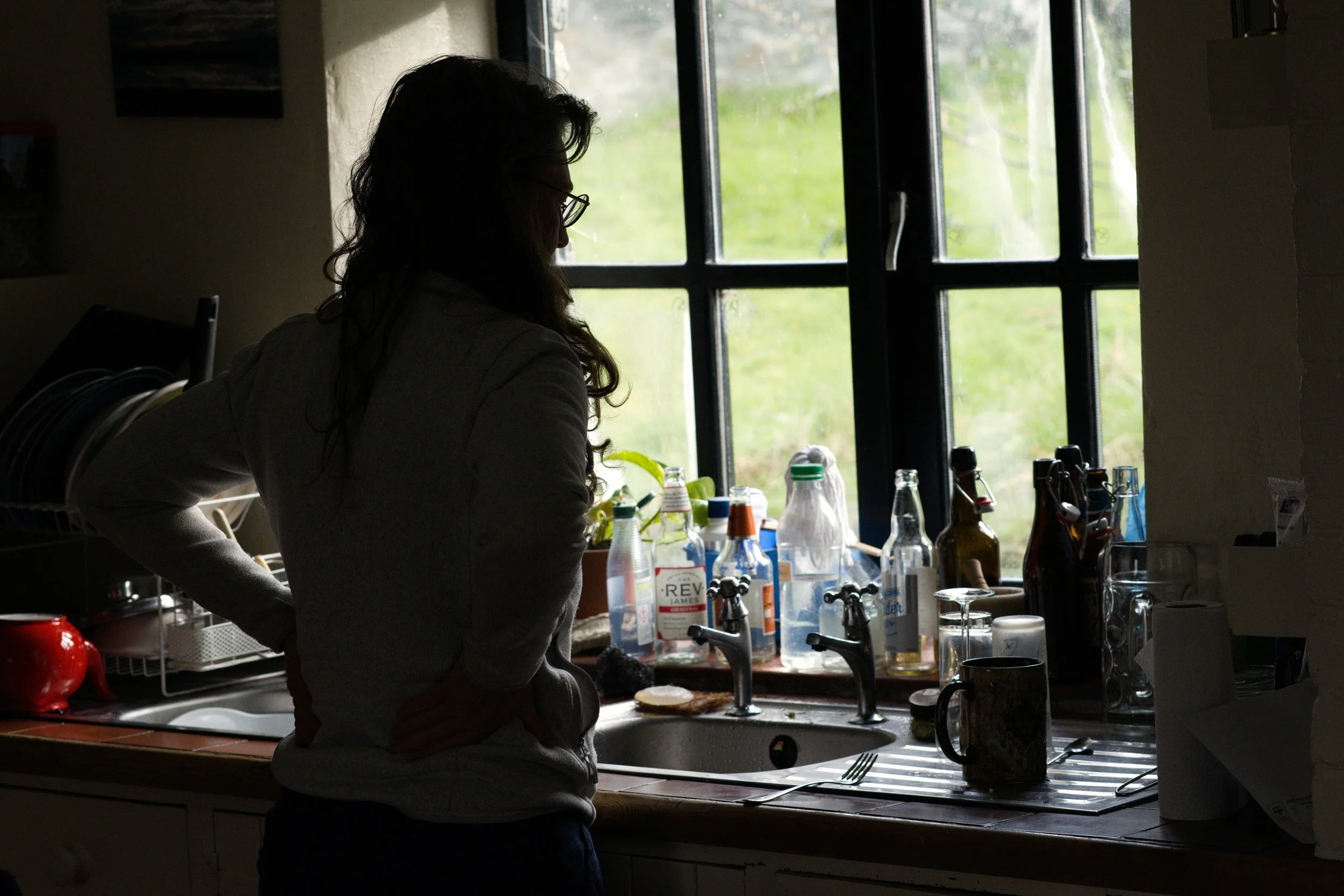
Sometimes burnout does not look like collapsing. Sometimes it looks like continuing anyway.
Why Rest Can Feel So Uncomfortable
For many people, rest does not just trigger guilt. It triggers anxiety.
The moment things become quiet, thoughts start catching up. Emotions start surfacing (you know? The ones you pushed down and hoped would stay there?) The nervous system suddenly has enough space to feel how overwhelmed it actually is underneath all the busyness.
Productivity can become a coping strategy. If you keep moving, planning, helping, multitasking, cleaning, achieving, or staying needed, you do not have to fully sit with how exhausted, disconnected, anxious, lonely, resentful, or emotionally overwhelmed you really feel underneath everything else.
For people who spent years learning that being useful, productive, or emotionally responsible kept them safe, slowing down can genuinely feel uncomfortable at first. This is also why many people feel restless on weekends (or always have a list), guilty on vacation, or unable to relax without reaching for their phone, cleaning something, multitasking, or trying to make the time “productive.”
The nervous system forgets how to simply exist without performing.

Sometimes exhaustion is not just physical. Sometimes it is the feeling of never fully being able to shut off.
Rest Is Not Something You Have To Earn
This is the part many people struggle to fully believe.
You do not need to completely burn out before you are “allowed” to slow down. You do not have to earn rest by becoming physically or emotionally depleted first. And needing rest does not mean you are weak, failing, or incapable of coping.
A lot of healing begins with recognizing that your nervous system was never designed to operate in constant overdrive forever.
What Actually Starts Helping
A lot of people think healing means finally becoming always calm, able to handle whatever life throws at them, rarely bothered or overwhelmed, and somehow magically “fixed.” But honestly, for many of us, healing starts with realizing how disconnected we have become from ourselves in the first place.
So many of us have spent years living almost entirely in our heads. Overthinking. Monitoring everything. Anticipating needs. Managing constant stress. Mentally juggling responsibilities while our nervous system quietly runs in the background like a laptop with 47 tabs open and no chance of shutting down.
That is part of why approaches like somatic therapy and nervous system work can feel so helpful. Not because they are trendy wellness buzzwords, but because many of us genuinely do not feel connected to our bodies anymore.
We are exhausted, overstimulated, anxious, emotionally overloaded, and stuck in constant mental survival mode. And honestly, having someone challenge some of the beliefs many of us absorbed growing up can be life changing (but very difficult) too. The belief that rest has to be earned. That productivity determines worth. That slowing down means you are failing somehow. We know what makes logical sense… but it’s so much harder for us to actually internalize and believe.
Once you start understanding where those patterns came from, it becomes much easier to stop treating yourself like a machine that should be able to function endlessly without consequences.
Truth is, most of us were not exactly taught emotional regulation growing up. Neither were our parents. We were taught to push through, don’t complain, smile regardless, push through the hard, keep functioning, and if it’s too much to handle - maybe buy another planner about it.

Some people have spent so long surviving that slowing down can feel unfamiliar, emotional, or even uncomfortable at first.
Nobody Taught Us How To Slow Down
Many people were never actually taught how to slow down in healthy ways. Instead, they were taught how to perform. How to keep functioning. How to stay useful. How to carry stress quietly and keep going no matter how overwhelmed they felt underneath it. That conditioning shows up in therapy too, probably more often than people realize.
Some people come into counselling wanting to know the exact plan immediately. They want to “do therapy properly.” They worry they are not healing fast enough. They want every session to feel productive, efficient, insightful, transformational, or measurable right away because slowing down enough to simply notice themselves can feel unfamiliar and uncomfortable at first.
A lot of people have spent years living in “go mode.” Constantly thinking, solving, planning, anticipating, managing, coping, and pushing through. So when someone finally slows down enough to actually feel what is happening underneath everything, it can feel surprisingly emotional (also sometimes scary or even pointless - as people question what it is “achieving”).
For many of us, therapy becomes the first place where we stop treating ourselves like a machine that should be able to endlessly produce without consequences. The first place where someone helps us understand why our nervous system feels stuck in survival mode all the time.
At Reclaim & Rise Counselling, we work with many people who look completely “fine” from the outside while quietly feeling exhausted, disconnected, emotionally overloaded, or unable to fully relax anymore. Through individual counselling, anxiety therapy, ADHD support, trauma therapy, and nervous system focused approaches, we help people better understand why their mind and body have been stuck in survival mode for so long. We understand how hard it can be to live in a brain that never fully shuts off and a body that has forgotten how to feel safe slowing down.
Sometimes healing does not start with dramatically changing your entire life. Sometimes it starts much smaller than that. Realizing your exhaustion makes sense. Understanding why rest feels uncomfortable and learning that your nervous system is not broken for struggling under the weight of constant pressure, overstimulation, emotional labour, and survival mode for so long.
If you are looking for support, you can also learn more about our therapy team or book a free consultation through our website.